Course History
Course History & Stories
- E.J. (Ted) Hart & Andrew Hempstead
History of the Banff Springs Golf Course
“The most successful course is one that will test the skill of the most advanced player, without discouraging the duffer, while adding to the enjoyment of both.”
—Stanley Thompson, golf course architect
When the official opening shot was hit at the Banff Springs Golf Course on July 15, 1911, the Canadian Rockies was a remote wilderness. Banff Avenue was a rough, unpaved trail with a boardwalk linking early businesses such as the Mount Royal Hotel and the King Edward Hotel. Beyond the main street were a smattering of residential streets and corrals owned by pioneering outfitters like the Brewster brothers, Tom Wilson, and “Wild” Bill Peyto. In the world of golf, Harry Vardon won his fifth British Open Championship in 1911, and famed courses such as Merion (Ardmore, Pennsylvania), National Golf Links (Southampton, New York), Interlachen (Edina, Minnesota), and Shawnee (Shawnee, Pennsylvania), also celebrated opening tee shots that year.
The Original Course
A young Scottish golfer named William E. “Bill” Thomson arrived in Banff in 1910 and found employment at the Banff Springs Hotel. He was asked by management to design a nine-hole golf course on the flats below the hotel, where
the valley constricted between the cliffs of Mount Rundle and the Bow River, built as close to the river as possible to provide the opportunity to bring water into play. The plan was for a course 2,790 yards in length, with the individual holes being 160 yards, 290 yards, 150 yards, 650 yards, 200 yards, 500 yards, 360 yards, 320 yards, and 140 yards, respectively. Course construction began in the spring of 1911. The ground was extremely rocky with little topsoil, and although some clearing and rough grading were done, it is likely that the native grasses were simply cut down to create the first fairways. Sandy deposits in the riverbed were piled up and hauled in dray wagons to the location of the bunkers and greens for spreading. The formal opening took place on Saturday, July 15, 1911.
Early Golfing
In the first year, it was reported that “between 20 and 30 people are to be found following the ball around the course every day.” The first course record was shot by Thomson with 31 soon after opening. The women’s record was established in August when Mrs. Leslie, a guest at the Banff Springs Hotel, recorded a score of 51. Although popular, the speed at which the course was built left room for improvement. In 1912, the original sand greens were replaced by grass, a watering system was installed, and a water feature was added.
Donald Ross Course
In 1916, the daily green fee increased from $0.50 to $1.00. The following year, the Canadian Pacific Railway sold the course to the government for $5,112, and the Banff Springs Golf Course became government property. The agreement included the expectation that the course would be expanded to 18 holes. Donald Ross, the renowned golf architect from Pinehurst, North Carolina, was commissioned to design the 18-hole course. Although the design contract was somewhat controversial with Banff residents for its cost, the government official in charge stated that: "I am advised that in the United States expert golfers will travel thousands of miles to reach a course which they know has been laid out by this man." The Ross design extended from the clubhouse (now the superintendent's residence) to the east as far as the area that, in the late 1980s, would become Tunnel 9. The new course opened for the 1923 season. During this same time, a campground was established between the Banff Springs Hotel and the golf course (on the site of today’s 14th and 15th holes).


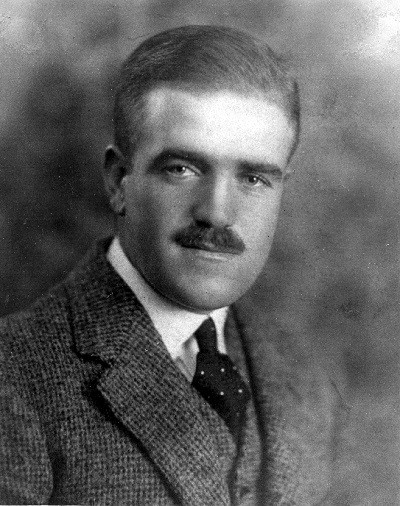
Although the Banff Springs Golf Course was thriving in the mid-1920s, its success was overshadowed by events in Jasper, to the north, where golf course architect Stanley Thompson had been commissioned to build a golf course at the Jasper Park Lodge. Subsequently, the Canadian Pacific Railway purchased the lease to the Banff course back from the government and commissioned Thompson to build a new course, laid out to take the best possible advantage of the scenery, including a small lake lying directly under the steep cliffs of Mount Rundle. The final design extended from the Banff Springs Hotel to the lake, necessitating the relocation of the campground. Work on the new course began in 1927, with around 200 men clearing, blasting, and sculpting under the supervision of Thompson. By the summer of 1928, sufficient work had been carried out to allow for the first nine to be put in play, officially opening on August 1, 1928, with Tom Wilson, Banff's most famous pioneer, driving the ceremonial first ball. Work on the remaining new holes was finished in 1929. The reported construction cost of $500,000 made it the most expensive golf course ever built anywhere in the world. At the same time as the course was being finished, work proceeded on a new Tudor-style clubhouse beside the 1st tee, which is now the Waldhaus Restaurant.
Shell's Wonderful World of Golf (Launch Banff Springs 1962 Episode)

Tunnel 9
Approval for a new clubhouse in the centre of the course and an additional nine holes was obtained in late 1986, to be designed by Canadian Bill Robinson and his design partner, Geoffrey Cornish, a former Stanley Thompson associate. On July 1, 1989, two months after the completion of the new clubhouse, the par 36, 3,482-yard Tunnel 9 officially opened. It also marked a reconfiguration of the Thompson course, with a new rotation of holes, strategically placed so that each of the three resulting nines (named Rundle, Sulphur, and Tunnel) in the 27-hole layout would start and end at a new clubhouse.
Recent Times
Over the decades, the heritage values of the original Thompson course had been largely lost. As a result, in the early 1990s, plans were put in place to: "permit the restoration of the heritage Stanley Thompson course to its original state." Chosen to perform the restoration on the famous Cauldron was Robert Trent Jones Jnr., whose father had worked with Stanley Thompson. Using historical information and photographs, Jones's group was able to determine the exact details of Thompson's original design and closely follow it. After major winter damage in 1996, money was needed for course repairs, and the restoration project, along with any dreams of an expansion to 36 holes, were abandoned. Accordingly, the old fairway turf was stripped, new irrigation systems were installed around, and the original greens were rebuilt and plated with penncross bentgrass.
Today, well before the season’s first tee shot is struck in May, grounds’ staff are out on the course removing the temporary fences set up around the greens to to protect them from elk, watering greens to replace lost moisture, mechanically sweeping the entire course of aerification soil cores and elk droppings from the previous fall, repairing bunker depths, pressurizing irrigation systems, and replacing course fixtures, such as signage and trash cans. Although the golfing season extends into October, preparations for course closure begin as early as August, when soil nutrients are adjusted to prepare the grass for winter snow cover. In October, the greens are aerified, mower cutting heights are increased, final fertilization and protective fungicide sprays are applied to the course, “elk fences” are placed around the greens, and all course hardware is removed.
Course Stories
American Society of Golf Course Architects
Although architect Stanley Thompson is best known for his Canadian golf courses, his influence extended into the United States, and in 1946 he was a founding member of the American Society of Golf Course Architects (ASGCA). Donald Ross, who designed the 1924 Banff Springs Golf Course served as the first honorary president, while luminaries such as Robert Trent Jones Sr. and J.B. McGovern were other founding members. Today, the ASGCA is headquartered in Brookfield, Wisconsin, with members from across North America actively involved in the design of new courses and the renovation of existing courses.
Audubon
When the Banff Springs Golf Course was rebuilt in the 1990s, one of the stated goals of course management was to obtain Audubon Cooperative Sanctuary Program for Golf Courses certification from Audubon International, and the certification was granted to the course in 1999. Audubon is a not-for-profit environmental and educational organization dedicated to protecting and sustaining land, water, wildlife, and natural resources; its golf course program is specifically designed for golf course landowners.
As part of the course's commitment to the program, and in order to gain full certification, soil testing was conducted (the tests served as a mapping tool to guide application of pesticides), 13 hectares (32 acres) of previously groomed golf course was returned back to natural montane, habitat was maintained for cavity-nesting birds as well as dead brush for denning animals, and it was agreed that only moderate quantities of fertilizer would be applied to fairways and greens.
Bear 66
Parks Canada had been monitoring a grizzly bear known as Bear 66 for a number of years before the spring of 2005, when she began appearing frequently at the Banff Springs Golf Course with three newborn cubs. Throughout that spring, the Crag and Canyon provided running commentary for local residents, reporting that the family of bears had been spotted in various parts of town and that on one occasion, she had come across an illegal camper. He “woke up and opened his eyes and there was Bear 66 and her three cubs staring at him . . . and as he rolled over, she bit him on the butt.” But it was on the fairways of the Banff Springs Golf Course that Bear 66 was sighted most frequently. Wildlife specialists from Parks Canada made a huge effort to keep her out of trouble—and curious visitors out of her way—but they couldn’t protect her from a train, which took her life while she was crossing the tracks on August 19, 2005. Two of her cubs were subsequently killed on the highway by vehicles. The third motherless cub was subsequently transferred to a zoo in Saskatchewan.
Bob Bray
At the end of World War II, there was a "changing of the guard" as far as competition went in the Banff Springs Golf Club. In particular, one golfer who would leave an indelible impression on the club in the years ahead. He was Bob Bray, a native of Cornwall, England, who had been raised in Canada and had worked for the Hudson's Bay Company in Calgary before serving with the R.C.A.F. in the war. In 1946, he married Doris McLeod of Banff and came to work for her family's company, Rocky Mountain Tours and Transport. At age 28, he was already an accomplished golfer, competing regularly against the province’s best. But Bray made his mark in Banff most prominently; he defeated Lou Crosby to win the Men’s Club Championship in 1946, and the next year, he represented the club in the Calgary Herald district competition at Calgary's Earl Grey Golf Course, along with club mates Jock McCowan Jr., Forbes Duke, and Gordon Blakemore, and walked away as the district champion. By July 1948, the Crag and Canyon was reporting that "Bob Bray, classy local golfer, has pretty well dominated the play at the Banff Springs Golf Club so far this season by annexing the President's Trophy and the Tombstone competition," and the next month, he repeated his win of the club championship. Bray went on to win the club championship a record 16 times, with his last triumph occurring in 1970.
While on a winter golfing vacation in San Diego with his wife in January 1975, Bray had a heart attack and passed away. Although just 57, Bray had made a greater impact on the Banff Springs Golf Club than any other player and was regarded by many as being in the class of the best players in Alberta, such as Bob Wylie, Doug Silverberg, and Keith Alexander. His early death deprived the club of one of its real spark plugs and liveliest personalities.
CASPER MCCULLOUGH (1906–1975)
Casper McCullough was born in Bocabec, New Brunswick, in 1906. As a young man, he worked on the CPR’s Algonquin course at St. Andrew's. In the 1920s, he attended the Massachusetts State College during the winter to study turf agronomy and then heard of the plan to have Stanley Thompson design and build a new course at the Banff Springs. He came west with Thompson in 1927 to work on the project and, due to his increasing abilities, eventually became construction foreman. While continuing his winter education in Massachusetts, he worked in Banff for several summers after the course's completion, and upon graduation in 1933, he was offered the job of general superintendent at the Banff Springs Golf Course. The CPR advertised the Banff Springs Golf Course widely as the best on the continent. McCullough, who had already proven himself as a perfectionist when it came to turf maintenance, was the ideal choice to fulfill the promise, and the appointment marked the beginning of his leaving an indelible mark on the course and its history over the next four decades.
CHARTER MEMBERS
Dr. Gilbert Atkin (Banff)
David Bayne (Banff)
Dr. Reginald Harry Brett (Banff)
Robert Earle Brett (Banff)
Dr. Robert G. Brett (Banff)
Jim Brewster (Banff)
Noel E. Brooks (Calgary)
Laurence J. Clarke (Calgary)
Louis Crosby (Banff)
F.G. Denton (Calgary)
A.B. Foster (Banff)
John Halstead (Calgary)
Norman Luxton (Banff)
A.B. MacDonald (Banff)
James “Jock” McCowan (Banff)
A. McMahon (Calgary)
M.G. Murphy (Banff)
George L. Peet (Calgary)
Francis W. Peters (Winnipeg)
A. Price (Calgary)
G.H. Rawlins (Banff)
Hayter Reid (Banff)
Frank Shackle (Calgary)
William Toole (Calgary)
George A. Walker (Calgary)
F.F. Wilson (Calgary)
THE CROSBY FAMILY
The Crosbys, one of the most respected and well-known Banff families, have been associated with the Banff Springs Golf Club since its inception. Louis Crosby (1887–1982) moved to Banff from Prince Edward Island in 1907 to work as an accountant for Jim and Bill Brewster at the Brewster Transport Company. He worked for them for 57 years, serving as both president and general manager. While working for the Brewsters, Louis and Gertrude, his English-born wife, built a tea room at Lake Louise. The summer operation expanded to become Deer Lodge and remained in the Crosby family for over 60 years.
Lou, as he was known to everyone, lived with Gertrude in a home by the Bow River that they finished building in 1913. They called the home Abegweit, a Mi'kmaq word meaning “cradle in the waves.” Here, they raised five children—Fredrick, Douglas, Marion, Marjorie, and Rob. The youngest of the five Crosby siblings, Rob, recalls that his brothers and sisters all met with success: Fred graduated from Cornell University and became manager of Deer Lodge; Douglas, a Rhodes Scholar, became a professor at the University of Alberta; Marion went to the University of Berkley and wrote for Family Circle magazine's food and nutrition section; and Marjorie worked in the hotel business in Vancouver. Rob studied aeronautical engineering at the University of British Columbia and was employed by the Royal Canadian Air Force in a variety of capacities; he even worked on the famous CF 105 Avro Arrow plane in the 1950s.
The Crosby family was always heavily involved in winter sports such as skiing and speed skating; Rob won provincial outdoor speed skating championships and claimed a gold medal in the downhill event at the 1939 Canadian Amateur Ski Association championships. In summer, golf was a popular pursuit for the Crosbys, with Louis, Douglas, and Marion each winning multiple club championships. Both Louis and Rob are members of the Banff Sports Hall of Fame.
DONALD ROSS (1872–1948)
To this day, Scottish-born Donald Ross, who redesigned the original Banff Springs Golf Course, is regarded as one the world’s most influential golf course architects. He is noted for timeless layouts that relied on natural contours to create memorable holes.
Ross began his career as a professional golfer, as did all golf course architects at the time, and served an apprenticeship under Old Tom Morris at St. Andrews. In 1899, a Harvard professor vacationing in Scotland suggested to Ross that he should teach the game in the United States, and by 1900, Ross had found employment in North Carolina as the professional at the famed Pinehurst Resort. Although Ross had no experience as an architect, he was commissioned by Pinehurst’s owner, James Tuft, to design a course, now the famed Pinehurst No. 2. Although thrust unexpectedly into his new avocation, Ross continued to teach and play, and he recorded five Top 10s in the U.S. Open between 1902 and 1907. But golf course design became Ross’s passion. Over five decades, he designed over 400 courses—mostly in the United States but also in Canada. In addition to Pinehurst No. 2, famous Ross courses include Seminole, Oak Hills, and Oakland Hills.
By the time he commenced work on the Banff course, he already had a reputation as one of the world's best designers and had begun utilizing his skills on several other Canadian courses, including the Algonquin course at St. Andrews (New Brunswick), which the CPR had taken over in 1905, as well as the Royal Ottawa course in 1912. At the same time as he was working on the Banff project, he was engaged in bringing the Mississauga course up to a championship calibre and in redesigning three courses in Winnipeg, including St. Charles Country Club. Other Canadian Ross courses include the Essex Golf and Country Club (Windsor, Ontario), Rosedale Golf Club (Toronto, Ontario), and Brightwood Golf & Country Club (Dartmouth, Nova Scotia).
Ross passed away in 1948, two years after helping to establish the American Society of Golf Course Architects (of which Stanley Thompson was a co-founder), and in 1977 he was elected to the World Golf Hall of Fame.
GOLFING ROYALTY
Both the Banff Springs Golf Course and the Banff Springs Golf Club always prided themselves on their ability to make good on the royal part of the "Royal and Ancient Game." Given its setting in one of the world's most beautiful locations, it is not surprising that several members of the royal family would visit Banff and partake in the game that was being so eagerly embraced by those of their station. The first royal visit to Banff occurred in August 1916, when the Duke of Connaught, the third son of Queen Victoria and the Governor ¬General of Canada, accompanied by the Duchess and their daughter Princess Patricia, all played the course. Reports of their activities stated that "her Royal Highness is a better golfer than His Royal Highness and Princess Patricia is a better golfer than either." The duke returned to Banff in August 1918, accompanied by the Duke of Pembroke, and they were seen every day at work on their game.
In 1919, 26-year-old Edward, Prince of Wales, the future King Edward VIII and Duke of Windsor, made his first official trip to Canada. Arriving in Banff on September 17, 1919, he was greeted by a large group of cheering residents, to whom he delivered a stirring speech, followed by his investiture by the Stoney as Chief Morning Star. Lunch was hosted by Dr. Brett at the Brett Sanitarium, after which "the prince played golf with Prof. Thomson, attended an informal dance at the Banff Springs Hotel in the evening and enjoyed a midnight bath in the big swimming pool." The prestige of having the prince play the course was further heightened during his September 1923 visit to Canada, as by then his international reputation had grown enormously, along with his golfing skills. Rather than a visit with numerous public appearances, this time he expressed his wish not to have any public engagements over the period of his four-day vacation. This allowed him plenty of time to devote to playing golf, which he did. He competed against his personal attendant, Walter Peacock, with Thomson caddying.
CHANGING ROTATION
In 1989, the Banff Springs Golf Course hole numbering changed. The order of play remained as Thompson has had envisaged, but the rotation was changed to allow golfers to start from the new clubhouse. The new rotation is as follows, with vestiges of the 1924 Donald Ross course also included.
Ross Thompson New Rotation
1924 1928 1 989
1 15
2 16
1 3 17
2 4 18
4 5 1
5 6 2
7 3
8 4
9 5
10 10 6
11 7
12 8
13 9
14 10
15 11
18 16 12
17 13
18 14
OILMEN’S TOURNAMENT

Most non-club events hosted at the Banff Springs Golf Course are one-off affairs, but a few have become annual events that the hotel and indeed the town of Banff have come to embrace. The longest running of these is the Oilmen’s Tournament, which has been held since 1951. Since 1966, the host has alternated; in odd-numbered years, the Fairmont Banff Springs Hotel hosts and in even-numbered years, the Fairmont Jasper Park Lodge.
In early 1951, four oil industry executives—George Dunlap, Kendall Hert, Arvil Minor, and Russ Schoonmaker—were having lunch at the Calgary Petroleum Club and came up with the idea of holding an Alberta oil industry golf tournament. Arrangements were made with the Earl Grey Golf Club in Calgary and 160 players were accepted for a two-day event in early August 1951. It proved so successful that it was decided to try it again in 1952 on an expanded basis at the Banff Springs Golf Course. For the second event, 300 applications were received, and the board decided to include 192 players organized into 12 flights, each of which was named after an Alberta oilfield. The tournament was expanded to a three-day format and began on August 1, 1952, with each competitor driving off the No. 1 tee over the Spray River in quest of the sterling silver prizes to be awarded to the four finalists in each flight. These were presented two days later at sunset on the 18th green by Calgary's mayor, flanked by red-coated Mounties, in an impressive ceremony.
Having enjoyed the resort environment provided at the Banff Springs Hotel in 1952, the oilmen decided to make Banff the permanent home of the competition. Applications to play grew so rapidly that it was decided to make the tournament invitational and to limit it to oil industry management, both Canadian and international rather than strictly Albertan. By 1954, the Oilmen’s Tournament was providing a level of business and prestige for the Banff Springs Hotel equal or greater than that of Golf Week, with some 500 guests staying in the hotel and participating in the numerous social events, which included parimutuel and sweepstakes betting on the play, a "style revue," several dinners, a "swimming aquacade," and a giant barbeque.
The year 1954 also saw not only the beginning of several Oilmen’s traditions, including the Sirloin Snack Bar at the Devil’s Cauldron and the Best Dressed Golfer award, but also one of the most exciting finals ever staged for the 1st Flight (Redwater) laurels when John Poyen, one of Alberta's better golfers, beat Bob Manahan in 20 holes. As international oil executives lined up to gain entrance to the tournament, further innovations continued to be added yearly; big-name entertainers were hired, such as Dennis Day in 1956 and Phil Ford and Mimi Hines in 1961, and well-known golfing personalities began to hold demonstrations and clinics. During one of these demonstrations several years later, golf professional Andy Bean, who was the guest instructor that year with Fuzzy Zoeller, uttered a well¬-remembered line when one of the spectators watching his demonstration on No. 7 asked him how he held his hands in order to hook the ball. Bean replied, "I don't know, when I want to hook I just think ‘hook.’"
THE ORIGINAL CLUBHOUSE
The original Banff Springs Golf Course clubhouse was completed soon after the course opened in 1911. It was a comfortable, modern-framed wooden building measuring six metres (20 feet) by 14 metres (45 feet) and set on a concrete and stone foundation. It consisted of a large, central, open "recreation room," which was flanked on either side by men's and women's locker rooms. It was noted at the time that it boasted an up-to-date "complete lavatory system," as well as a "lean to building" to house the course professional, Bill Thomson, and his wife Alice. For the convenience of the players, the clubhouse included a veranda supported on stone pillars, where Mrs. Thomson would "attend to afternoon teas."
The building was used as a clubhouse until 1929, when the new Stanley Thompson course opened and the 1st tee was moved to below the Banff Springs Hotel. Backing onto the maintenance compound and mostly surrounded by mature trees, the building has been converted to a residence for the course superintendent. It is located between the 12th green and 13th tee and is marked by a plaque noting its historic significance.
PRINCE OF WALES CUP WINNERS
1925 R. Morrison
1926 G.H. Ross
1927 A. Harbourn
1928 J. Riley
1929 Charlie Reid
1930 William Thompson
1931 F. Hoblitzell
1932 W.A. Sime
1933 Phil Farley
1934 F. Hoblitzell
1935 W. Hudson
1936 F. Hoblitzell
1937 J. Richardson
1938 D. MacKenzie
1939 R. Whaley
1940 R. Whaley
1941 W.H. Ripley
1942 Carl Haymond
1943 J. Drum
1944-46 not played
1947 C.E. Brodeur
1948 M. Tootle
1949-73 not played
1974 Howie Martin
1975 Wayne Rossington
1976 H. Mercer
1977 Scott Allred
1978 not played
1979 Scott Allred
1980 J. Dick
1981 Scott Allred
1982 V. Allred
1983 V Allred
1984 George Christou
1985 A. Hunter
1986 H. Krampe
1987 H. Krampe
DONALD ROSS COURSE, 1924
Hole 1 342 yards
Hole 2 457 yards
Hole 3 353 yards
Hole 4 455 yards
Hole 5 162 yards
Hole 6 375 yards
Hole 7 180 yards
Hole 8 502 yards
Hole 9 368 yards
Hole 10 383 yards
Hole 11 194 yards
Hole 12 424 yards
Hole 13 140 yards
Hole 14 398 yards
Hole 15 500 yards
Hole 16 403 yards
Hole 17 392 yards
Hole 18 374 yards
STANLEY THOMPSON (1893-1953)
It has been said that no golfer has made more of an impression on Canada than Stanley Thompson, a larger-than-life character known as the “Toronto Terror” (some say for his golfing prowess, others for his business acumen). According to Golf In Canada, A History, by Canadian golf historian James A. Barclay, "Between 1920 and 1953, this Canadian amateur golfer turned golf architect sculpted out of farmland, heath, forest, and mountain some of the finest and most scenic golf courses in the world." He is credited with the design of at least 125 courses, 100 of them in Canada, but nowhere did he achieve such success and fame as he did first in Jasper, then in Banff.
Thompson was born in Toronto in 1893, one of five golfing brothers. He and his brothers won many national titles between them in the 1920s. At an early age, he began caddying under the noted professional George Cumming at the Toronto Golf Club. Thompson’s education apparently included a turf management course at the Ontario Agricultural College in Guelph, showing he had an interest in Cumming’s other activity—golf course architecture, but he was drawn away by World War I to serve with the Royal Canadian Artillery, where he became a commissioned officer and was mentioned in dispatches for gallantry.
Upon returning from overseas in 1919, he pursued his career as an amateur golfer but also joined forces with his brother Nicol, professional at the Hamilton Golf Club, and Cumming, to form the golf course design firm of Thompson, Cumming and Thompson. Due to the pent-up demand for new golf courses created by the war, the early 1920s were a time of huge opportunity for accomplished architects, and the new company flourished. By early 1922, Thompson could afford to go out on his own, and he created Stanley Thompson & Co., "Golf and Landscape Engineers, Architects." The building was located on King Street West in Toronto. In addition to the Banff Springs Golf Course, he designed famous layouts such as Jasper Park Lodge Golf Course (1924; Jasper, Alberta), St. George’s Golf and Country Club (1928; Toronto, Ontario), Capilano Golf Club (1937; Vancouver, British Columbia), and Highland Links (1938; Cape Breton Island, Nova Scotia). His designs were significant for their use of natural features, a throwback to links courses of Scotland. Irregular bunkers on direct lines between tee and green and holes aligned with distant mountains are also classic Thompson traits.
By the time Thompson designed Highland Links in 1938, he had become known as much for his golf course design as for his flamboyant attire, his love of whiskey, and his colourful stories. Thompson died in 1953, penniless after losing multiple fortunes. To those he owed money, his debts were forgiven for the joy he had given them all over the years, or so the story goes.
THE COURSE THAT NEVER WAS
During a 1934 visit to Banff to announce the construction of the Administration Building as a Depression project, Prime Minister Bennett was questioned on the matter of a second Banff golf course and indicated, probably much to the dismay of the CPR, that if not too much was expected, he could foresee the building of one by the following year. The Crag and Canyon speculated that the location would be "along the ridge to the east of the Tunnel Mountain campground, one of the finest locations on the continent" and it was reported that surveyors were already at work.
In 1935, work began on clearing the area adjacent to the campground. Trees and stumps were removed and burned and basic grading was completed. There the matter rested while the Advisory Council and Banff citizens continually pressed the government to complete the work, but it was eventually indicated that completion of the Tunnel Mountain course would be too costly, and in 1938, Roy A. Gibson, director of Lands, Parks, and Forest Branch, announced that Banff’s second course was to be built at the foot of Cascade Mountain.
THE STANLEY THOMPSON INFLUENCE
The design work of Stanley Thompson has for a long time had a tremendous influence on my life. Even before I had heard the name Stanley Thompson, his courses were providing me with the inspiration to pursue a career in golf.
Thompson had a flair for routing holes gracefully into the natural landscape. He had an unparalleled ability for creating holes that had their own unique, individual personalities. That is why it is so easy to remember each hole on his courses long after you have played them. He knew how to expose the dramatic natural features of a site through the use of elevated tees, natural green sites, and long, extended views. His courses are often grand in scale and yet they still have an intimate feel to them. Perhaps his best-known design trademark is the way he designed his bunkers. The high sand flashes, irregular landforms, and infinite variety of shapes and lines he created make his bunkers a visual delight. They help to give each of his holes personality.
It wasn't until I visited Banff and Jasper that I fully appreciated the genius of Thompson's artistic skill. The way Thompson captured a variety of mountain views in the layout of these courses and the phenomenal bunkering at Jasper and Banff is unparalleled anywhere in the world of golf. Thompson was truly ahead of his time. He had a design flair that continues to influence golf course architects today.
—Doug Carrick
Carrick is one of North America’s leading golf architects. He has over 50 courses to his credit, including Predator Ridge (Vernon, British Columbia), Greywolf (Invermere, British Columbia), Bigwin Island (Lake of Bays, Ontario), Muskoka Bay (Gravenhurst, Ontario), Terra Nova (Port Blandford, Newfoundland), and The Carrick on Loch Lomond (Loch Lomond, Scotland).